Collection: Don Quichotte
“Pages Choisies de Don Quichotte de la Mancha, 1957” by Salvador Dalí
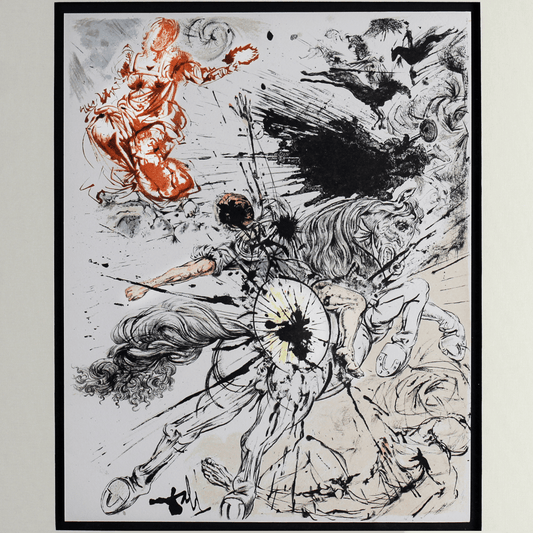
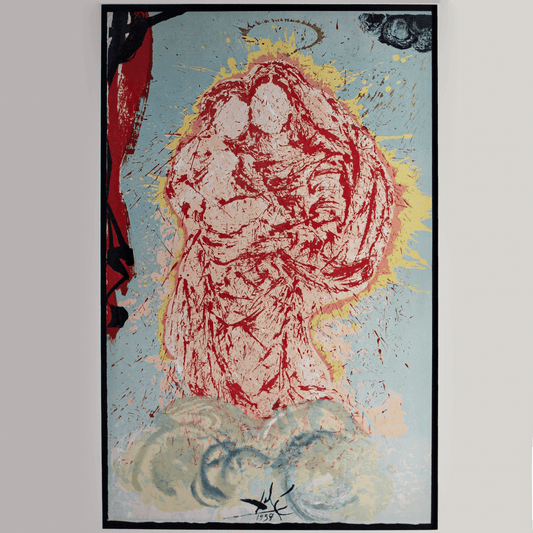
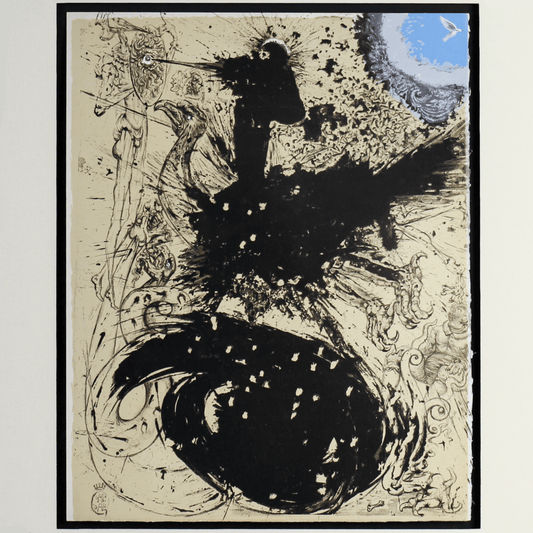
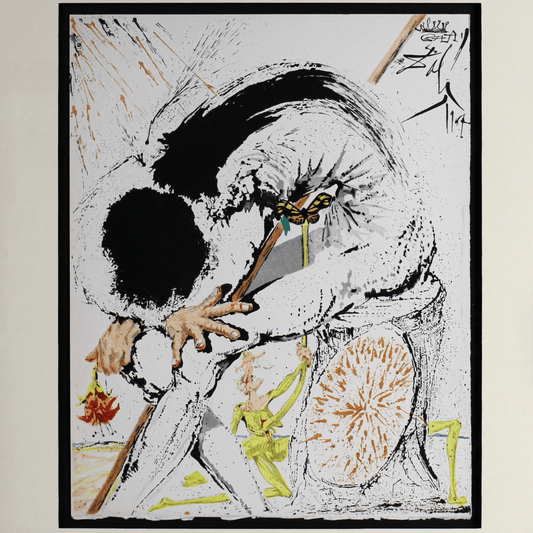
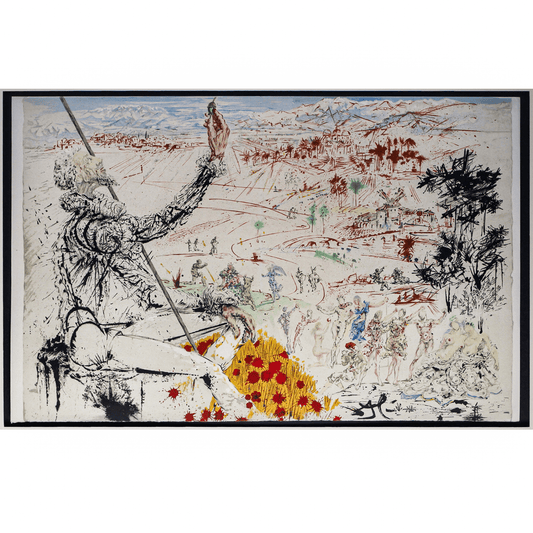
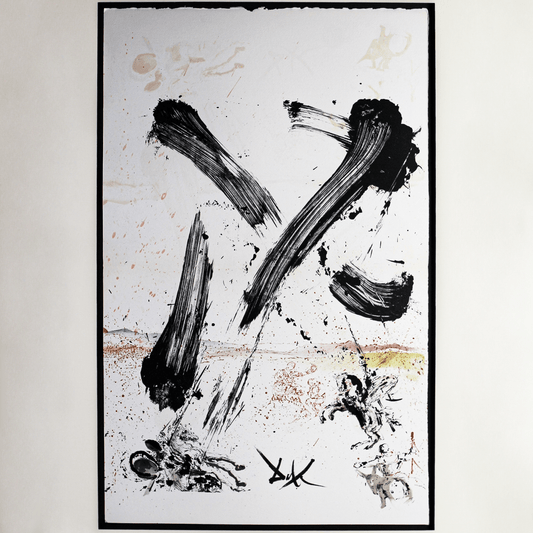
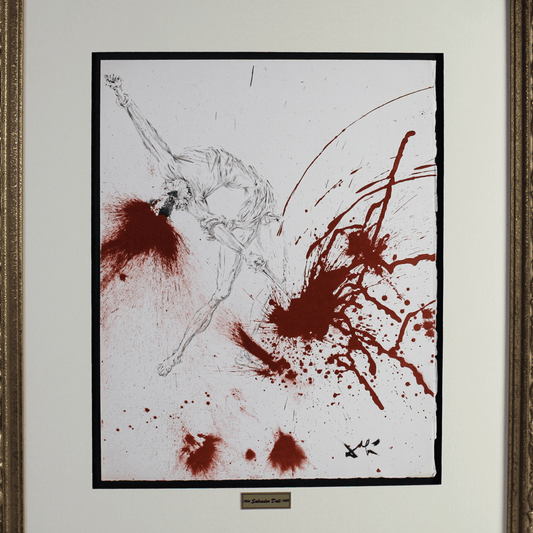
Don Quichotte (1957) stands as a landmark in Salvador Dalí’s graphic oeuvre, comprising 12 original lithographs created on stone by the artist’s own hand to illustrate Miguel de Cervantes’ epic novel. To capture the protagonist's descent into madness, Dalí pioneered a unique style of "Tachisme," employing radical and aggressive techniques to achieve visceral, accidental markings. These included firing an antique 15th-century musket loaded with ink-filled bullets at the lithographic stones and using hollowed rhinoceros horns as pens to create chaotic splatters. Further developed with watercolor and collage, the resulting images vividly translate the central themes of the novel—mental illness, turmoil, and perception disorder—into a visual language of abstract expressionism. A hallmark of authenticity for the larger compositions in this suite is the original fold line, as three images were executed on double pages to bypass the physical constraints of the portfolio dimensions.
Continue Reading
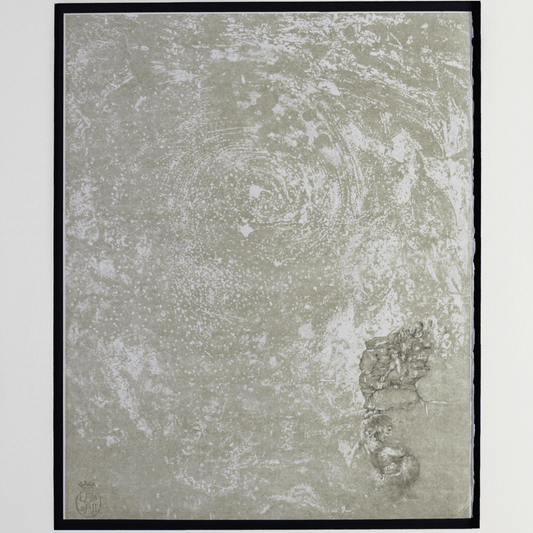
This historic project began in 1956 and required the expertise of six different print houses to realize Dalí’s complex vision, finally seeing completion on October 28, 1957. Published and distributed by Joseph Forêt of Paris, it is distinguished as the very first original lithograph portfolio released by the master painter. This particular selection belongs to an ultra-limited special edition of only 25 sets, enumerated in Roman numerals and printed on premium Arches paper featuring the artist's watermark. While the total tirage for the edition was 233 sets—with the majority printed on Rives paper—this Roman numeral series represents the pinnacle of the release. Every authentic work from this portfolio is further verified by Dalí’s signature or inscription within the stone, marking a definitive intersection between the first great European novel and the 20th century’s most provocative Surrealist


 Sold out
 Sold out
 Sold out
 Sold out
 Sold out
 Sold out